Marketing attribution is becoming more challenging as third-party cookies become less reliable. Browser restrictions, stricter privacy regulations, consent requirements, and evolving consumer expectations have made traditional tracking less effective. As a result, marketers often deal with fragmented customer journeys, inconsistent reporting, and limited visibility into what actually drives conversions and revenue.
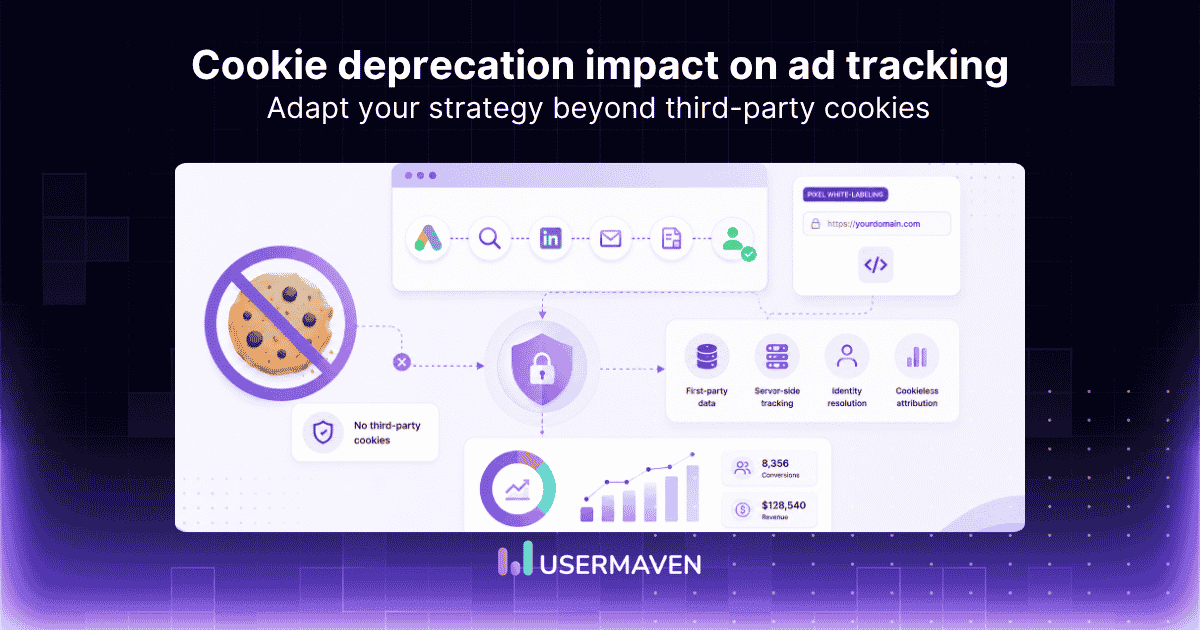
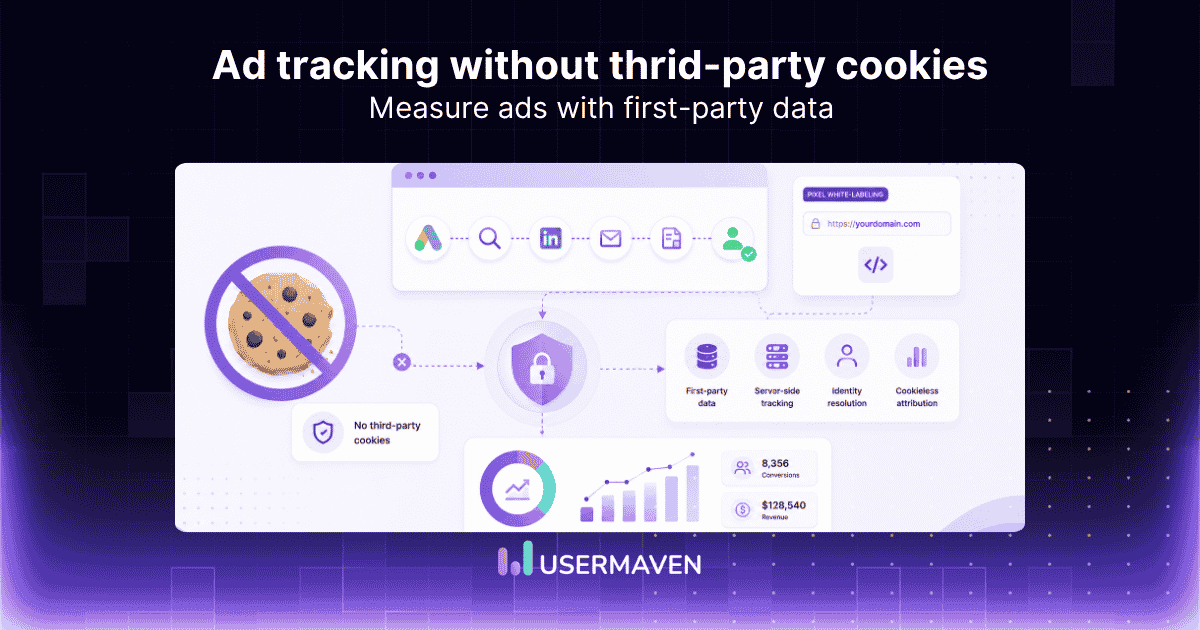
To solve this, businesses are adopting cookieless attribution. This approach rely on first-party data, server-side tracking, identity resolution, and privacy-conscious measurement instead of third-party cookies. This makes it possible to connect marketing touchpoints while respecting user privacy.
In this guide, you’ll learn how cookieless attribution works, along with the different methods and technologies behind it. You’ll also discover its benefits and challenges, plus best practices for building an accurate, future-ready attribution strategy.
Key takeaways
- Cookieless attribution replaces reliance on third-party cookies with first-party data, server-side tracking, and identity resolution to measure marketing performance more reliably.
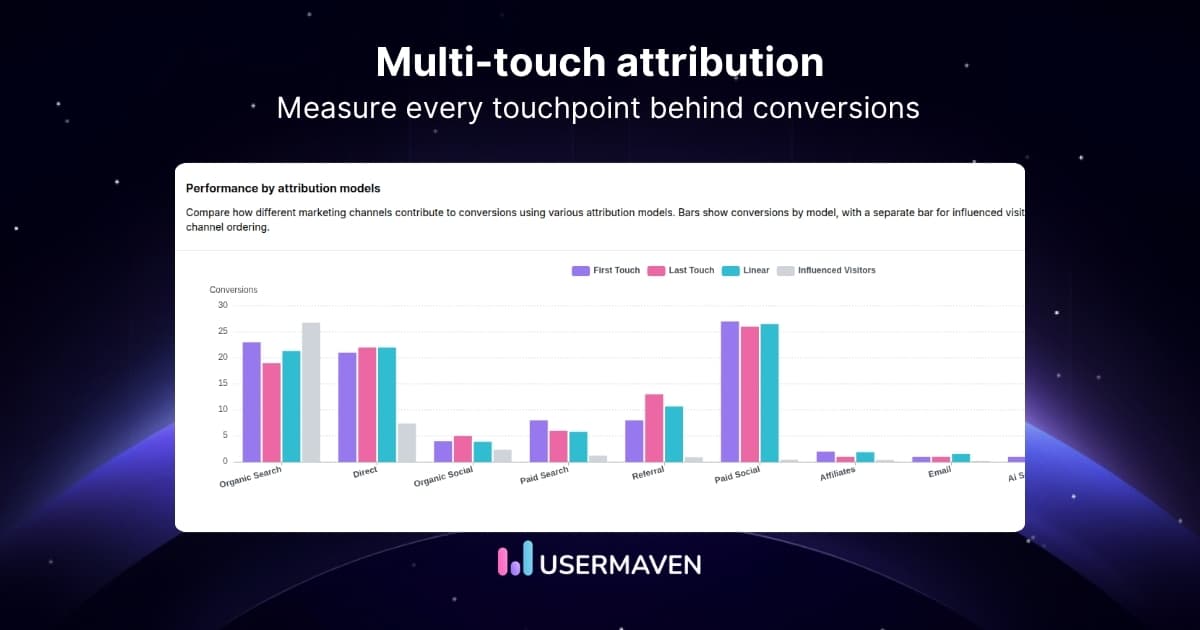
- Cookieless multi-touch attribution (MTA) provides a more complete view of the customer journey by assigning conversion credit across multiple marketing touchpoints.
- A successful cookieless attribution strategy depends on high-quality first-party data, consistent campaign tracking, and connected marketing, CRM, and revenue data.
- Methods such as server-side tracking, identity resolution, conversion APIs, and marketing mix modeling help businesses maintain accurate attribution in a privacy-first environment.
- Preparing for a cookieless future requires ongoing optimization, regular tracking audits, and privacy-conscious measurement practices that can adapt to evolving browser and regulatory changes.
What is cookieless attribution?
Cookieless attribution is the process of measuring how marketing channels, campaigns, and customer touchpoints contribute to conversions without relying on third-party cookies. Instead, it uses privacy-conscious methods such as first-party data, server-side tracking, identity resolution, and cookieless multi-touch attribution (MTA) to connect user interactions across the customer journey.
Unlike traditional cookie-based attribution, cookieless attribution collects data directly from your owned channels. It combines this with CRM, product, and revenue data for a complete view of marketing performance analytics. This helps you understand which efforts generate pipeline and revenue, all while adapting to changing privacy standards and browser restrictions.
Maximize your ROI
with accurate attribution
*No credit card required
Cookieless attribution vs. cookieless tracking
Although the terms are often used interchangeably, cookieless attribution and cookieless tracking serve different purposes. Tracking focuses on collecting user interactions, while attribution determines how much credit each marketing touchpoint receives for a conversion.
| Concept | Purpose |
|---|---|
| Cookieless tracking | Collects website and product interactions without relying on third-party cookies. |
| Cookieless attribution | Assigns conversion credit to the marketing channels and touchpoints that influenced the customer journey. |
| Cookieless multi-touch attribution (MTA) | Distributes credit across multiple marketing interactions instead of only the first or last touchpoint. |
| Cookieless analytics | Measures user behavior, engagement, and product usage using privacy-conscious data collection. |
Why traditional cookie-based attribution is becoming less reliable
For years, marketers relied on third-party cookies to understand how users interacted with websites, ads, and campaigns across the web. While this approach worked well for cross-site tracking, it has become less reliable as browsers and privacy standards have evolved.
Several factors have reduced the effectiveness of traditional cookie-based attribution:
Browser restrictions
Browsers like Safari and Firefox block third-party cookies by default, making it harder to track users across websites and accurately attribute conversions.
Privacy regulations
Regulations such as GDPR and CCPA require businesses to be more transparent about how they collect and use customer data. Many users now choose to limit tracking through consent preferences.
Ad blockers and tracking prevention
Modern browsers and ad blockers can prevent tracking scripts from loading, resulting in missing events, incomplete customer journeys, and attribution gaps.
Cross-device customer journeys
Customers frequently switch between phones, tablets, and desktops before converting. Cookie-based attribution often struggles to connect these interactions into a single journey.
Walled gardens
Platforms like Google, Meta, and LinkedIn each provide their own attribution reports. Because their data is largely isolated, marketers often see inconsistent conversion numbers across platforms.
These challenges don’t make attribution impossible, but they do make cookie-dependent attribution less reliable. That’s why many businesses are moving toward cookieless attribution and cookieless multi-touch attribution (MTA), which rely on first-party data, server-side tracking, and identity resolution instead of third-party cookies.
How cookieless attribution works
Cookieless attribution replaces third-party cookies with a combination of first-party data, server-side tracking, identity resolution, and cookieless multi-touch attribution (MTA). Together, they help marketers measure the customer journey while respecting modern privacy standards.
A typical cookieless attribution process looks like this:
1. Capture first-party interactions
Every customer journey begins with a user interaction, such as clicking an ad, visiting your website, signing up for a webinar, or submitting a form. Instead of relying on third-party cookies, these interactions are captured using first-party tracking and server-side data collection.
2. Connect customer identities
As visitors interact with your website, product, or CRM, identity resolution helps connect those touchpoints into a single customer journey. Known identifiers like email addresses, account IDs, or CRM records improve attribution accuracy across devices and sessions.
3. Record conversions and revenue
When a visitor completes an important action, such as requesting a demo, making a purchase, or becoming a customer, this counts as a conversion. It’s then linked to previous marketing interactions using first-party and CRM data.
4. Apply an attribution model
The collected data is then analyzed using an attribution model. With cookieless multi-touch attribution (MTA), credit is distributed across multiple touchpoints instead of assigning all the credit to the first or last interaction.
5. Generate attribution reports
The final step is turning customer journey data into actionable reports. Marketers can measure channel performance, campaign effectiveness, pipeline contribution, and revenue attribution to understand which marketing efforts drive business growth.
Example workflow:
Paid Search → Blog Visit → Webinar Registration → Demo Request → Customer
Unlike traditional cookie-based attribution, this approach combines first-party data, CRM records, and server-side events to create a more complete and privacy-conscious view of marketing performance.
Cookieless attribution example
To understand how cookieless attribution works in practice, let’s look at a typical B2B SaaS customer journey.
Customer journey:
LinkedIn ad
↓
Organic search
↓
Blog visit
↓
Webinar registration
↓
Demo request
↓
Customer
Here’s how a cookieless attribution platform measures this journey:
| Customer interaction | How it’s measured without third-party cookies |
|---|---|
| User clicks a LinkedIn ad | UTM parameters and first-party tracking capture the campaign source. |
| User returns through Google Search | Server-side tracking records the new session and associates it with the existing visitor where possible. |
| User registers for a webinar | The email address becomes a first-party identifier, helping connect previous interactions. |
| User requests a demo | CRM data links the lead to marketing touchpoints across the journey. |
| The deal closes | Revenue data is connected to the customer journey, allowing cookieless multi-touch attribution (MTA) to distribute credit across every influencing channel. |
Instead of assigning all the credit to the final interaction, cookieless multi-touch attribution (MTA) recognizes the contribution of each marketing touchpoint. This gives marketers a clearer understanding of how channels work together to generate pipeline and revenue.
Main cookieless attribution methods
Cookieless attribution isn’t powered by a single technology. It combines multiple methods to collect customer data, connect interactions, and measure marketing performance without relying on third-party cookies.
Data collection methods
These methods help businesses capture reliable customer data from their owned channels.
First-party data
First-party data is the foundation of cookieless attribution. It includes information collected directly from your website, product, forms, purchases, and customer accounts. Because it comes directly from your users, it’s more reliable and privacy-conscious than third-party data.
Zero-party data
Zero-party data is information customers intentionally share with your business, such as survey responses, communication preferences, and product interests. It provides highly accurate insights for personalization and attribution.
Server-side tracking
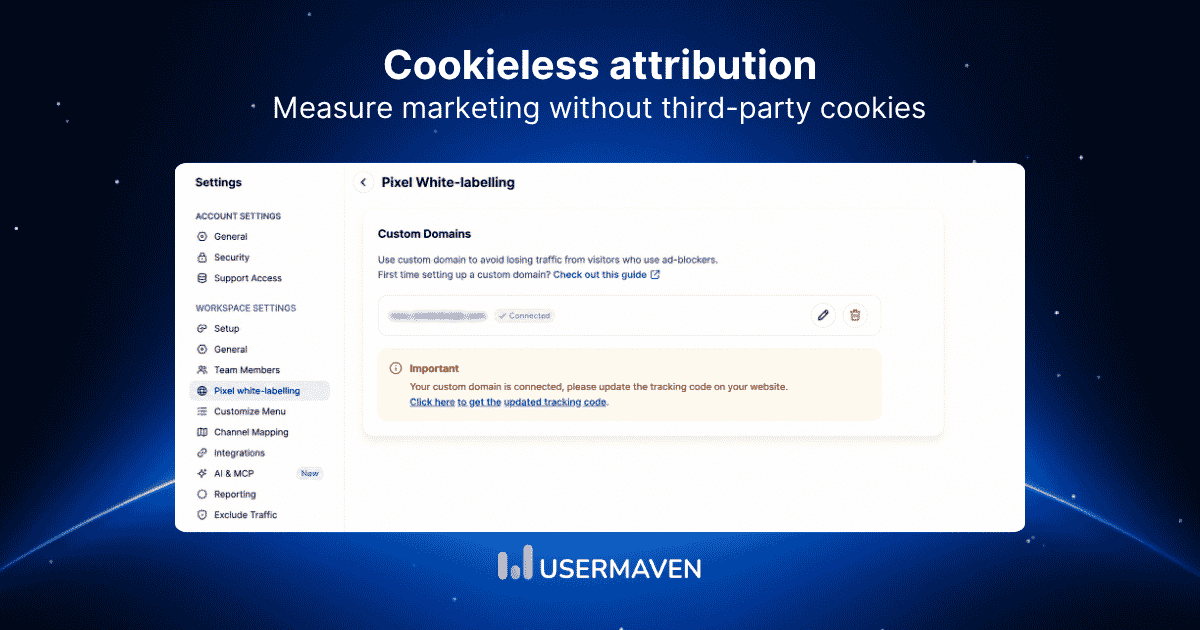
Server-side tracking sends events directly from your server to your analytics and attribution platform instead of relying on the user’s browser. This improves data reliability and reduces signal loss caused by browser restrictions and ad blockers.
Identity and measurement methods
These methods help connect customer interactions across sessions, devices, and marketing channels.
Identity resolution
Identity resolution combines customer interactions into a unified journey using identifiers such as email addresses, account IDs, or CRM records. It’s a core component of accurate cookieless multi-touch attribution (MTA).
Deterministic matching
Deterministic matching uses known identifiers, such as email addresses or customer IDs, to accurately connect user interactions across different sessions and devices.
Probabilistic matching
Probabilistic matching estimates user identity using behavioral patterns and device signals when direct identifiers aren’t available. While less precise than deterministic matching, it helps extend attribution coverage.
Most modern attribution platforms combine both methods to improve customer journey visibility while maintaining privacy standards.
Advanced attribution methods
These methods help marketers measure performance when user-level tracking is incomplete or additional insights are needed.
Conversion APIs and offline conversion tracking
Conversion APIs (CAPI) allow businesses to send conversion events directly from their servers to advertising platforms. Combined with offline conversion tracking, they help attribute revenue from CRM updates, sales calls, subscriptions, and purchases that browser-based tracking might miss.
Conversion modeling
Conversion modeling uses statistical and machine learning techniques to estimate conversions that cannot be directly observed because of browser restrictions, consent choices, or missing identifiers.
Marketing mix modeling (MMM)
Marketing mix modeling (MMM) measures the contribution of marketing channels using aggregated business data instead of individual customer journeys. It’s commonly used for budget planning and long-term performance analysis.
Incrementality testing
Incrementality testing measures the true impact of marketing campaigns by determining whether conversions would have occurred without the campaign. It complements attribution by identifying incremental business growth.
Data clean rooms
Data clean rooms enable businesses and advertising platforms to analyze aggregated customer data in a secure, privacy-preserving environment without exposing personally identifiable information.
Benefits of cookieless attribution
Cookieless attribution helps businesses measure marketing performance more accurately while adapting to evolving privacy standards.
Some of its key benefits include:
- More resilient measurement: Reduce reliance on third-party cookies with first-party data and server-side tracking.
- Better customer journey visibility: Connect touchpoints across channels to understand the full conversion path.
- More accurate multi-touch attribution (MTA): Distribute credit across multiple interactions instead of a single touchpoint.
- Smarter budget allocation: Identify the channels and campaigns that drive pipeline and revenue.
- Stronger first-party data strategy: Build reliable customer insights from data collected through your own channels.
- Greater control over marketing data: Unify marketing, CRM, product, and revenue data into a single measurement framework.
Challenges of cookieless attribution
While cookieless attribution improves privacy-conscious measurement, it also comes with a few challenges. Understanding these limitations helps businesses build a more effective attribution strategy.
- Identity fragmentation: Connecting users across devices and sessions is more difficult without third-party cookies.
- Anonymous visitor tracking: Anonymous interactions can be measured, but they’re harder to link to future conversions.
- Cross-platform reporting: Different attribution methods across ad platforms can lead to reporting discrepancies.
- Technical implementation: Setting up server-side tracking, CRM integrations, and identity resolution requires planning.
- Data quality issues: Inconsistent UTMs, incomplete CRM data, or missing events can reduce attribution accuracy.
- Changing privacy standards: Browser updates and privacy regulations require ongoing monitoring and adaptation.
How to implement cookieless attribution
Transitioning to cookieless attribution doesn’t require rebuilding your entire marketing stack. By following a structured approach, you can improve attribution accuracy while preparing for a privacy-first future.
1. Audit your current tracking
Identify where your marketing and analytics rely on third-party cookies and look for gaps in conversion tracking.
During this process, vulnerability scanning tools can help identify security gaps in your tracking infrastructure, supporting a safer transition to cookieless attribution while protecting customer data and maintaining compliance.
2. Build a first-party data strategy
Collect customer data directly through your website, forms, product usage, CRM, and other owned channels.
3. Implement server-side tracking
Move critical events to server-side tracking to improve data reliability and reduce browser-related tracking loss.
4. Connect your marketing stack
Integrate your CRM, advertising platforms, analytics tools, and revenue data to create a unified customer journey.
5. Choose the right attribution model
Compare cookieless multi-touch attribution (MTA), first-touch, last-touch, and other attribution models based on your business goals.
6. Standardize campaign tracking
Use consistent UTM parameters and campaign naming conventions to improve attribution accuracy.
7. Validate and optimize regularly
Review attribution reports, identify tracking gaps, and refine your implementation as marketing channels and privacy standards evolve.
Cookieless attribution with Usermaven
Usermaven is an AI-powered marketing attribution platform that helps businesses measure marketing performance without relying on traditional third-party cookies. By combining first-party data, server-side tracking, cookieless multi-touch attribution (MTA), and unified reporting, it gives marketing teams a complete view of the customer journey from the first interaction to revenue.

With Usermaven, you can:
- Automatically capture first-party customer data.
- Connect marketing, product, CRM, and revenue data into a single customer journey.
- Use cookieless multi-touch attribution (MTA) to measure how every touchpoint contributes to conversions and revenue.
- Compare multiple attribution models to understand marketing performance from different perspectives.
- Track funnels, customer journeys, and assisted conversions to identify optimization opportunities.
- Measure marketing-attributed pipeline, revenue, ROAS, and ROI with unified dashboards and reports.
- Leverage AI-powered insights to uncover high-performing channels and optimize marketing spend.
Whether you’re optimizing paid advertising, content marketing, email campaigns, or product-led growth, Usermaven helps you build an attribution strategy that connects every marketing effort to real business outcomes.
Maximize your ROI
with accurate attribution
*No credit card required
Conclusion
Cookieless attribution is reshaping how businesses measure marketing performance in a privacy-first world. By combining first-party data, server-side tracking, identity resolution, and cookieless multi-touch attribution (MTA), marketers can move beyond the limitations of third-party cookies and gain a clearer understanding of the customer journey, campaign performance, and revenue impact.
Usermaven is a leading marketing attribution platform built for the cookieless future. With first-party tracking, cookieless multi-touch attribution (MTA), AI-powered insights, customer journey analysis, and unified reporting, it helps you measure marketing’s true contribution to pipeline and revenue while staying ahead of evolving privacy standards.
Ready to future-proof your marketing measurement?
Book a demo to see how Usermaven helps you build an accurate cookieless attribution strategy, or start your free trial and discover what truly drives your business growth.
FAQs
How accurate is cookieless attribution?
Cookieless attribution can be highly accurate when it’s built on strong first-party data, server-side tracking, and identity resolution. While no attribution method can perfectly track every anonymous, cross-device journey, combining CRM data, consistent UTM parameters, and cookieless multi-touch attribution (MTA) provides a much more reliable view of marketing performance than relying on third-party cookies alone.
Does cookieless attribution eliminate the need for cookies?
No. Cookieless attribution reduces dependence on third-party cookies, but many solutions still use first-party cookies to support website functionality, session management, and customer experience. The goal is to measure marketing performance without relying on third-party tracking across different websites.
Does Google Analytics 4 support cookieless attribution?
Google Analytics 4 (GA4) supports cookieless attribution to a limited extent through behavioral modeling, conversion modeling, first-party cookies, and User-ID tracking. These features help estimate missing data when users decline cookies or tracking signals are unavailable.
However, GA4 primarily focuses on website and app analytics. It offers limited visibility into the complete customer journey across marketing, CRM, product, and revenue data. Marketing attribution platforms like Usermaven provide more comprehensive cookieless multi-touch attribution (MTA), unified customer journeys, revenue attribution, and AI-powered insights, making them better suited for measuring end-to-end marketing performance.
Is server-side tracking the same as cookieless attribution?
No. Server-side tracking is one method used to collect marketing and conversion data more reliably. Cookieless attribution is the broader measurement framework that combines server-side tracking, first-party data, identity resolution, CRM data, and attribution models to understand how marketing channels influence conversions.
Can cookieless attribution work across multiple devices?
Yes, but it depends on the available customer identifiers. When users log in, submit forms, or interact through authenticated accounts, identity resolution can connect their activity across devices. Anonymous users are more challenging to match, so cross-device attribution may not always be complete.
Can cookieless attribution work across multiple devices?
Yes, but it depends on the available customer identifiers. When users log in, submit forms, or interact through authenticated accounts, identity resolution can connect their activity across devices. Anonymous users are more challenging to match, so cross-device attribution may not always be complete.
Is cookieless attribution suitable for small businesses?
Yes. Small businesses can benefit from cookieless attribution by understanding which marketing channels generate leads and revenue without relying on outdated tracking methods. Many modern attribution platforms offer automated tracking and reporting, making implementation much simpler than traditional attribution setups.
What is the difference between cookieless attribution and cookieless multi-touch attribution (MTA)?
Cookieless attribution is the overall process of measuring marketing performance without third-party cookies. Cookieless multi-touch attribution (MTA) is a type of attribution model that distributes conversion credit across multiple customer touchpoints, providing a more complete view of the customer journey.
How do I choose the right cookieless attribution platform?
Look for a platform that supports first-party data collection, server-side tracking, cookieless multi-touch attribution (MTA), identity resolution, CRM integrations, revenue attribution, and customizable reporting. The right solution should help you measure the complete customer journey while adapting to evolving privacy standards.
Which cookieless attribution method is best for my business?
There isn’t a single best method for every business. Cookieless multi-touch attribution (MTA) is ideal for analyzing customer journeys, marketing mix modeling (MMM) helps optimize channel budgets, incrementality testing measures true campaign impact, and conversion modeling fills gaps caused by missing attribution signals. Many businesses combine these methods to gain the most complete view of marketing performance.
What are the best practices for implementing cookieless attribution?
Start by prioritizing first-party data and consistent UTM tracking. Connect your marketing, CRM, and revenue data, compare multiple attribution models instead of relying on one, validate tracking regularly, and review attribution reports as customer behavior and privacy standards evolve.
Updated

Written by
Adeel Khan
Growth Marketing Expert
Adeel Khan is a full-stack SaaS marketer with 10+ years of experience in content marketing, paid advertising, analytics, and conversion rate optimization. He shares practical insights and strategies drawn from hands-on experience, helping B2B SaaS marketers improve performance and make better marketing decisions.
All articles by Adeel →