Customer segmentation software helps teams group people and accounts by shared traits, behavior, or value so they can understand differences and act on them. The right choice depends on whether you need to analyze journeys, unify customer data, or activate campaigns.
This comparison focuses on ten tools for SaaS, B2B, and ecommerce teams. We compare their core purpose, practical use cases, and pricing access so you can build a shortlist around the job you need to do.
Key takeaways
- Start with the decision: Choose whether your priority is analysis, a unified customer data platform, or campaign activation.
- Connect segments to outcomes: Usermaven links audience behavior with attribution, conversions, and revenue where data is connected.
- Match the data: Check whether the platform groups visitors, known users, companies, or CRM contacts.
- Check the complete cost: Profiles, events, seats, activation, and integrations can affect the final price.
- Validate before acting: Good segments depend on reliable tracking, identity matching, and clear definitions.
Customer segmentation software at a glance
The shortlist below groups platforms by the work they are best suited to support. Pricing and entitlements can change, so confirm the current plan before committing.
| Tool | Best for | Pricing access |
|---|---|---|
| Usermaven | Marketing attribution connected to customer and product behavior | Custom quote |
| Twilio Segment | Customer data collection and audience distribution | CDP: custom quote |
| Mixpanel | Behavioral cohorts and product analytics | Free, paid and Enterprise |
| Amplitude | Product behavior and cohort analysis | Free and paid tiers |
| Userpilot | Product onboarding and in-app engagement | Paid plans; quote by scope |
| Contentsquare | Digital experience analysis | Custom quote |
| Maestra | Ecommerce customer data and omnichannel activation | From $2,000/month |
| Klaviyo | Ecommerce email and SMS audiences | Free and paid tiers |
| HubSpot CRM | CRM-based segments for marketing and sales | Free CRM; paid products |
| Google Analytics 4 | Web and app audience analysis | Free; 360 paid |
How we compared these tools
We reviewed publicly available vendor product and pricing information, focusing on audience data, analysis, activation, integrations, and the type of team each product serves. This is an editorial comparison, not a claim that we ran paid implementations or independently benchmarked every platform.
10 best customer segmentation software tools in 2026
These tools approach segmentation from different angles. Compare each one against your existing data, the people who will use it, and the action you need to take.
1. Usermaven
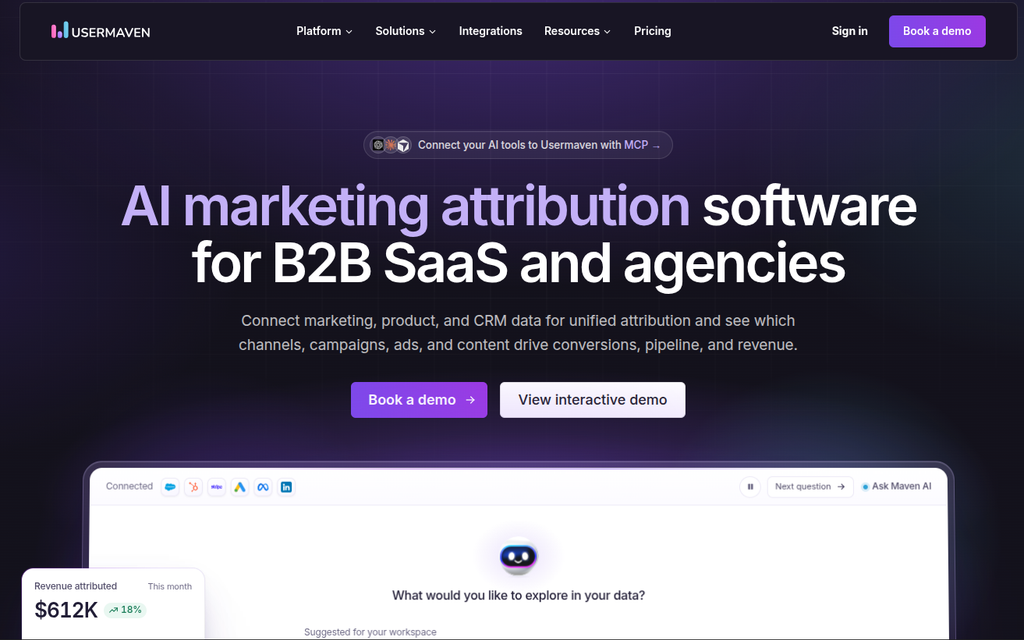
Best for: Marketing attribution connected to customer and product behavior.
Usermaven is marketing attribution software with customer segmentation, website analytics, and product analytics built in. It connects acquisition data with recorded customer journeys, conversions, CRM outcomes, and revenue, helping teams see which audiences arrive and what they do after signup.
Key features:
- Build customer segments from events, attributes, behavior, and acquisition sources.
- Compare segments across funnels, journeys, retention, and dashboards.
- Use paid ads and multi-touch attribution to examine conversion and revenue outcomes.
- Ask Maven AI questions and schedule AI Agents to investigate recurring changes.
- Use the Measurement Trust Center to investigate data quality and tracking issues.
Pricing: Business and Enterprise plans are custom-quoted. Enterprise includes custom attribution models; confirm entitlements and data requirements in your quote.
When it is best: Best when marketing, product, and revenue teams need one connected measurement workflow. Activation depends on available integrations and configured data.
2. Twilio Segment
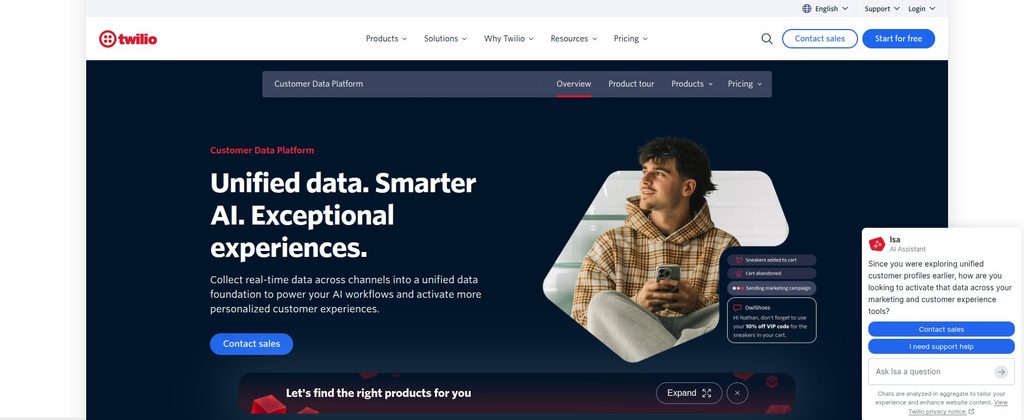
Best for: Customer data collection and audience distribution.
Twilio Segment is a customer data platform for collecting event and profile data from multiple sources and making that data available to downstream tools. It is useful when a data team wants shared customer profiles and audience activation across an existing stack.
Key features:
- Collect customer events from websites, apps, and connected sources.
- Unify customer data for audience building.
- Send data to analytics, advertising, and engagement destinations.
Pricing: The full customer data platform uses customized pricing. Twilio also lists separate Connections plans, so check which product and audience capabilities are included.
When it is best: Best for teams prioritizing data infrastructure and integrations. Confirm implementation ownership, identity rules, and the cost of activation modules.
3. Mixpanel
Best for: Behavioral cohorts and product analytics.
Mixpanel helps product and growth teams analyze events, funnels, retention, and user behavior. Its cohorts let teams group people by actions or properties and compare how those groups use a product.
Key features:
- Build event-based cohorts and investigate behavioral patterns.
- Analyze funnels, retention, and paths.
- Share or reuse cohorts according to the selected plan and integrations.
Pricing: Mixpanel offers free, Growth, and Enterprise plans. The free plan limits saved cohorts; usage and feature access should be checked against the current package.
When it is best: Best for product teams measuring adoption and retention. Verify whether campaign activation and account-level analysis require additional tools or paid features.
4. Amplitude
Best for: Product behavior and cohort analysis.
Amplitude is a digital analytics platform that helps teams explore how users move through a product. Behavioral cohorts group users using event-based rules, and predictive cohorts use models to estimate future behavior where available.
Key features:
- Create behavioral cohorts using events and user properties.
- Compare conversion and retention across audiences.
- Connect eligible cohorts with other tools through integrations.
Pricing: Amplitude offers a free entry plan and paid tiers; cohort limits, predictive features, and activation depend on plan and usage.
When it is best: Best for product-led teams evaluating onboarding, adoption, and retention. Confirm cohort limits and downstream destinations before selecting a plan.
5. Userpilot
Best for: Product onboarding and in-app engagement.
Userpilot combines product analytics with in-app experiences and user segmentation. Product teams can investigate user behavior and use audience rules to target onboarding or engagement experiences.
Key features:
- Segment users using profile and behavioral data.
- Analyze engagement and onboarding performance.
- Target in-app messages, walkthroughs, and surveys.
Pricing: Plans vary by capabilities and usage. Check the current package for segment limits, analytics, and in-app features.
When it is best: Best for software teams that want to act inside the product. Review the cost and integrations needed for broader marketing attribution.
6. Contentsquare
Best for: Digital experience analysis.
Contentsquare focuses on understanding how visitors experience websites and apps. It combines quantitative analysis with experience tools that help teams investigate where different audiences encounter friction.
Key features:
- Analyze behavior and journeys across customer groups.
- Investigate friction with session replay and experience analytics.
- Connect experience insights with other data sources.
Pricing: Pricing is tailored to selected products and business requirements; confirm the scope in a quote.
When it is best: Best for teams investigating digital experience and conversion friction. Check which analytics, replay, and integration modules are included.
7. Maestra
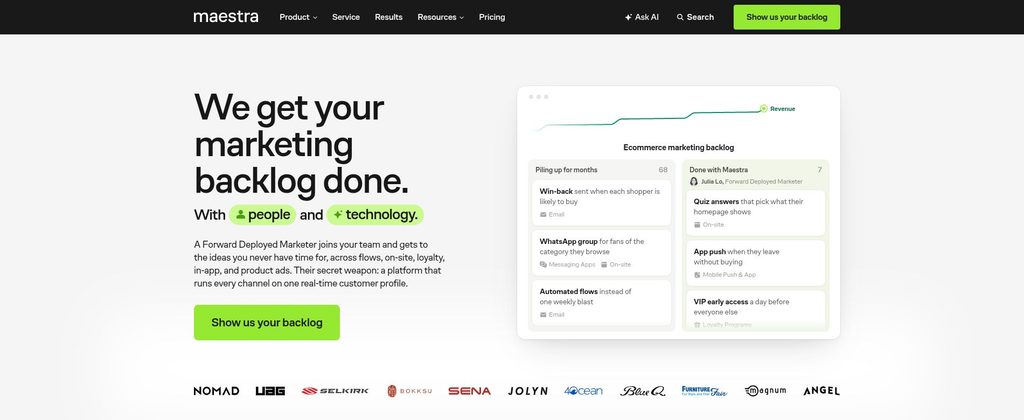
Best for: Ecommerce customer data and omnichannel activation.
Maestra combines an ecommerce customer data platform with segmentation and marketing activation. It is relevant when retail teams want customer profiles and coordinated campaigns across channels in one environment.
Key features:
- Create segments from customer attributes and shopping behavior.
- Combine customer data with campaign and personalization workflows.
- Support ecommerce engagement across multiple channels.
Pricing: Maestra publishes pricing from $2,000 per month for its CDP and initial active-profile allowance; additional modules and usage can affect the total.
When it is best: Best for ecommerce organizations seeking an integrated data and activation platform. Check the modules, support, and profile volume included.
8. Klaviyo
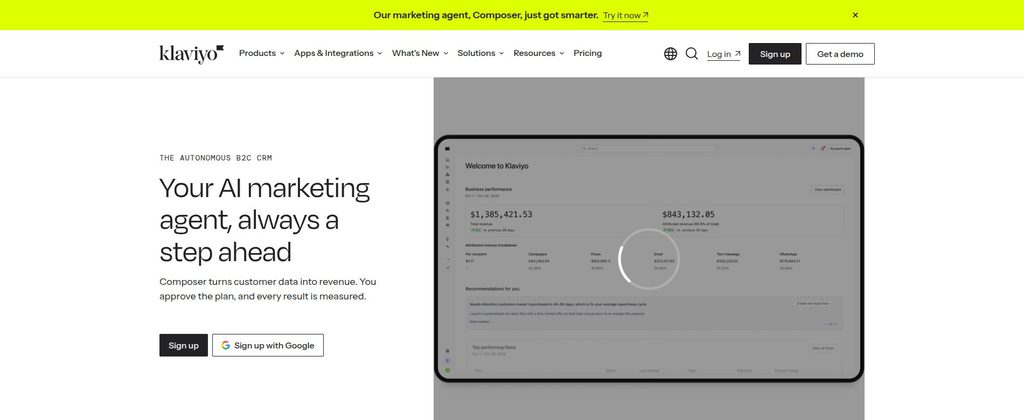
Best for: Ecommerce email and SMS audiences.
Klaviyo combines customer data and marketing tools for brands that want to create audiences and use them in messaging. Store activity, customer attributes, and engagement can inform segments for lifecycle campaigns.
Key features:
- Build audiences from customer profiles and activity.
- Use segments in email and SMS workflows.
- Connect ecommerce data with campaign measurement.
Pricing: Klaviyo offers a free entry option and paid plans that vary with active profiles and channels; messaging volume and add-ons affect cost.
When it is best: Best for ecommerce teams whose primary objective is campaign activation. Confirm profile limits and whether additional data platform features are required.
9. HubSpot CRM
Best for: CRM-based segments for marketing and sales.
HubSpot CRM organizes customer and company records that teams can use for segmentation and lifecycle workflows. It is a natural starting point when sales and marketing already work from HubSpot data.
Key features:
- Group records using CRM properties and activity.
- Use lists and connected marketing workflows to coordinate outreach.
- Connect sales and service context with customer records.
Pricing: HubSpot provides free CRM tools and paid products. Advanced segmentation and automation depend on the selected hub, plan, contacts, and seats.
When it is best: Best for CRM-centered B2B teams. Verify whether your required behavioral data and automation are included in the proposed package.
10. Google Analytics 4
Best for: Web and app audience analysis.
Google Analytics 4 helps teams analyze website and app events and build audiences around observed behavior. It can be useful for teams already working within Google’s analytics and advertising ecosystem.
Key features:
- Analyze users and events using dimensions and metrics.
- Create audiences based on conditions and behavior.
- Explore acquisition, engagement, and conversion reports.
Pricing: Standard GA4 is free; Google Analytics 360 is a paid enterprise product.
When it is best: Best for teams needing a broadly accessible web analytics baseline. Check data configuration, consent settings, retention, and activation requirements.
How to choose customer segmentation software
Begin with a specific decision, such as finding campaigns that bring activated users or identifying customers who need a renewal conversation. Then trace the data and action required to support that decision.
- Data sources: List the website, product, CRM, purchase, and support data needed for each audience.
- Identity and coverage: Check how visitors, users, accounts, and contacts are matched and how missing identities are handled.
- Segment freshness: Confirm whether audiences update automatically and whether the refresh timing fits your workflow.
- Analysis and activation: Test whether teams can compare conversion and retention or send a segment to the destination where action happens.
- Cost and access: Compare profiles, events, seats, integrations, support, and required add-ons.
- Governance: Review consent, access permissions, data retention, and applicable privacy requirements.
Choose by industry and use case
SaaS and product-led teams: Segment trial users by acquisition source, onboarding events, and feature adoption. Compare activation and retention before deciding which campaigns or experiences deserve investment.
B2B and sales-led teams: Compare audiences by company attributes, pipeline stage, and recorded engagement. A business phone system can support sales conversations, while analytics and CRM records help teams understand which outreach and customer journeys lead to opportunities.
Ecommerce teams: Compare new and repeat customers, purchase frequency, product interest, and campaign response. A platform that unifies store behavior and messaging may be more useful than an analysis-only tool when campaign activation is the immediate goal.
Service businesses: A practice using online soap notes software may need to keep sensitive clinical information separate from marketing analytics. Segment only appropriate, permitted information and review access and consent before connecting systems.
When a segment needs an operational follow-up, tools such as Mobile Text Alerts can support text messaging; confirm consent, audience synchronization, and delivery requirements before sending.
How Usermaven connects segments to marketing results
Usermaven groups visitors, users, leads, and companies using attributes and recorded behavior. Teams can compare audiences in funnels and journeys, then examine how acquisition sources and campaigns contribute to conversions and revenue when the required data is connected.
Maven AI can help investigate questions about your data, while scheduled Maven AI Agents can monitor recurring changes such as feature adoption or retention. The Measurement Trust Center provides visibility into data health so teams can investigate tracking and integration issues before relying on a segment-based conclusion.
For a closer look at how attribution, customer behavior, and reporting can work together, book a Usermaven demo and discuss your data sources and decision process.
FAQs about customer segmentation software
What is customer segmentation software?
It groups customers, users, or accounts using shared attributes and behaviors. Depending on the platform, teams can analyze those groups, share them with other systems, or use them in campaigns.
What is the best customer segmentation software?
The best fit depends on the job. Usermaven is suited to attribution and behavioral analysis, Twilio Segment to customer data infrastructure, and Klaviyo to ecommerce audience activation.
What are the main types of customer segmentation?
Common approaches include demographic, geographic, behavioral, and value-based segmentation. B2B teams may also use firmographic and account attributes.
Can customer segmentation tools update audiences automatically?
Many platforms support dynamic or refreshable segments, but refresh timing depends on the product, data source, and plan.
How much does customer segmentation software cost?
Some analytics and CRM tools offer free entry plans. Costs can rise with event volume, profiles, seats, activation features, support, and integrations.
What should I check before using AI for segmentation?
Check the quality and permission status of source data, review how segments are defined, and validate suggested insights before making consequential campaign decisions.
Updated

Written by
Ryan Mitchell
Marketing Analytics Strategist
Ryan Mitchell is a marketing analytics strategist specializing in campaign measurement, customer journeys, and marketing performance. He writes about analytics, reporting, and data-driven marketing strategies, helping SaaS and B2B teams measure what matters across every stage of the customer journey.
All articles by Ryan →