

Ryan Mitchell
Marketing Analytics Strategist
Ryan Mitchell is a marketing analytics strategist specializing in campaign measurement, customer journeys, and marketing performance. He writes about analytics, reporting, and data-driven marketing strategies, helping SaaS and B2B teams measure what matters across every stage of the customer journey.
Read articles by Ryan
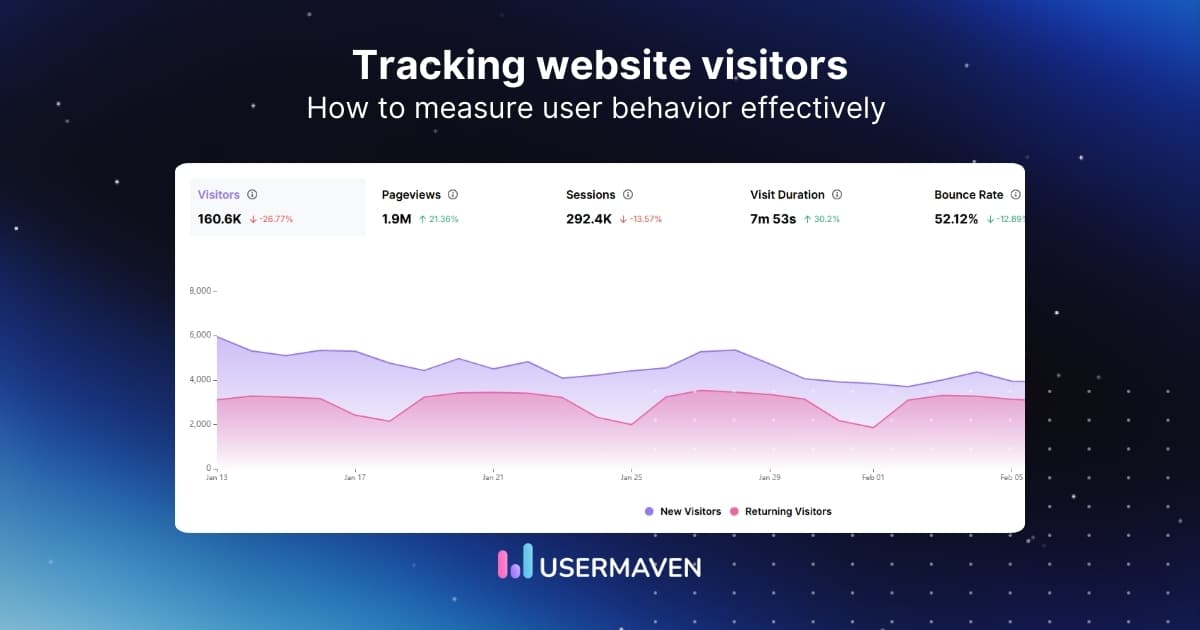
A complete guide to tracking website visitors
Driving traffic is only half the battle. If you’re just looking at total hits, the actual customer journey remains a mystery, leaving you with numbers that don’t explain why people leave or what keeps them. Tracking website visitors is about seeing the behavior behind the numbers. It moves you past basic stats so you can […]
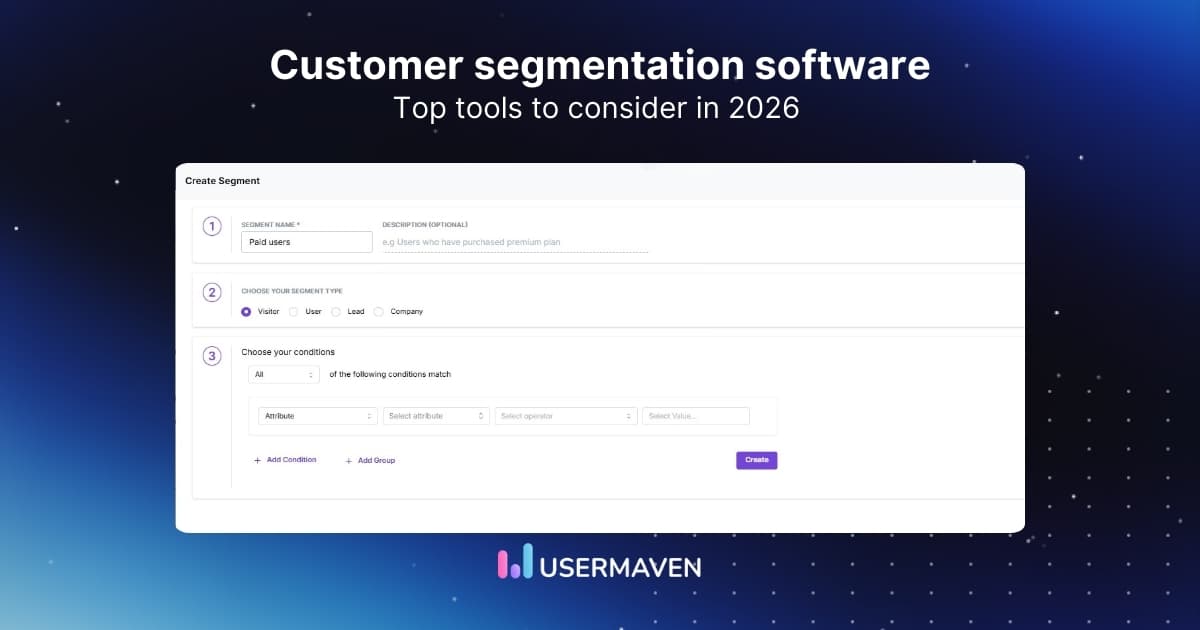
20+ best customer segmentation software for 2026
Your best customer and your worst churn risk look identical without the right data. Treating them the same way is costing you revenue. Customer segmentation software changes that. Through audience segmentation, you can group customers by behavior, demographics, and engagement patterns so every interaction feels relevant and timely. This guide is a practical walk‑through of […]
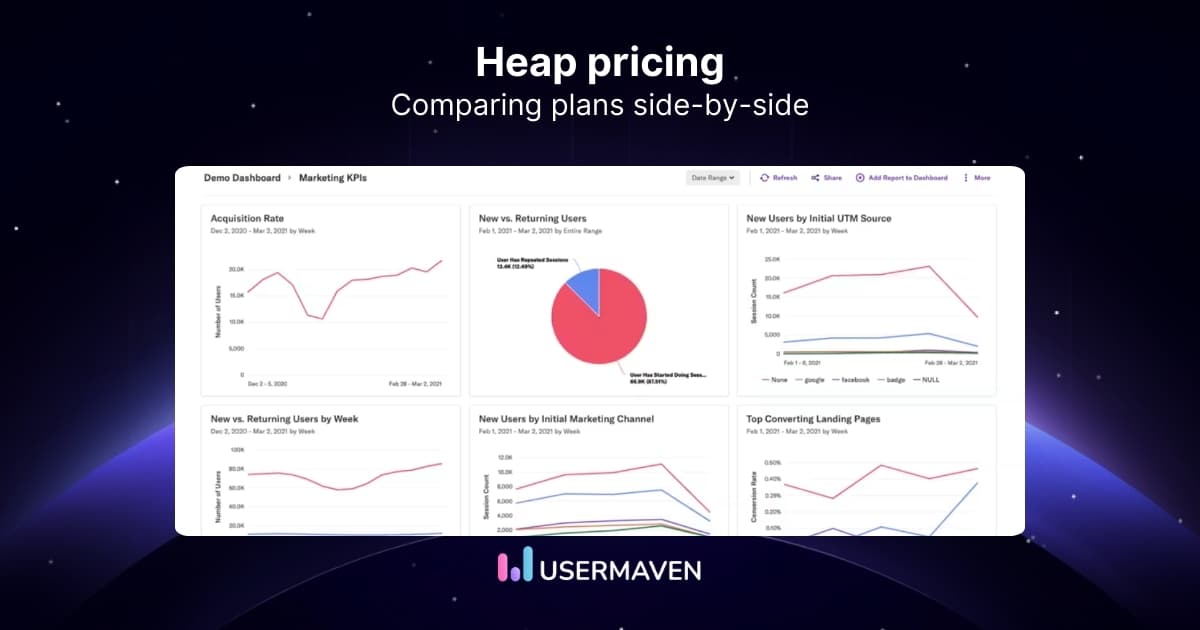
Heap pricing concerns: Pros, cons & better alternative
Most teams look at pricing first because it sets the rules for everything that comes after: tracking scope, reporting cadence, and who can actually use the data. Heap is a common pick for product analytics, so the key is understanding how its pricing plans are organized and how the model scales with real usage. In […]
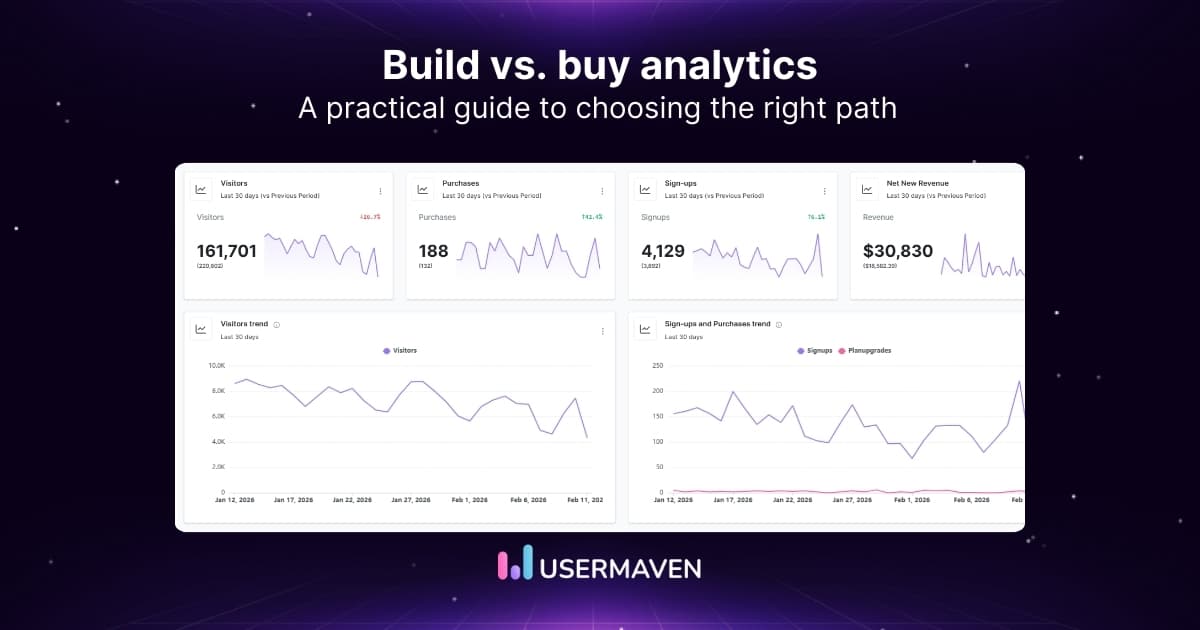
Build vs. buy analytics: What you’re actually choosing
Build vs. buy analytics usually starts as a quick thought in a sprint planning doc. Then it becomes a real decision: your product is shipping, your data is growing, and people want answers across the customer journey. One direction gives you a system shaped exactly around your product. The other gives you a ready-made setup […]
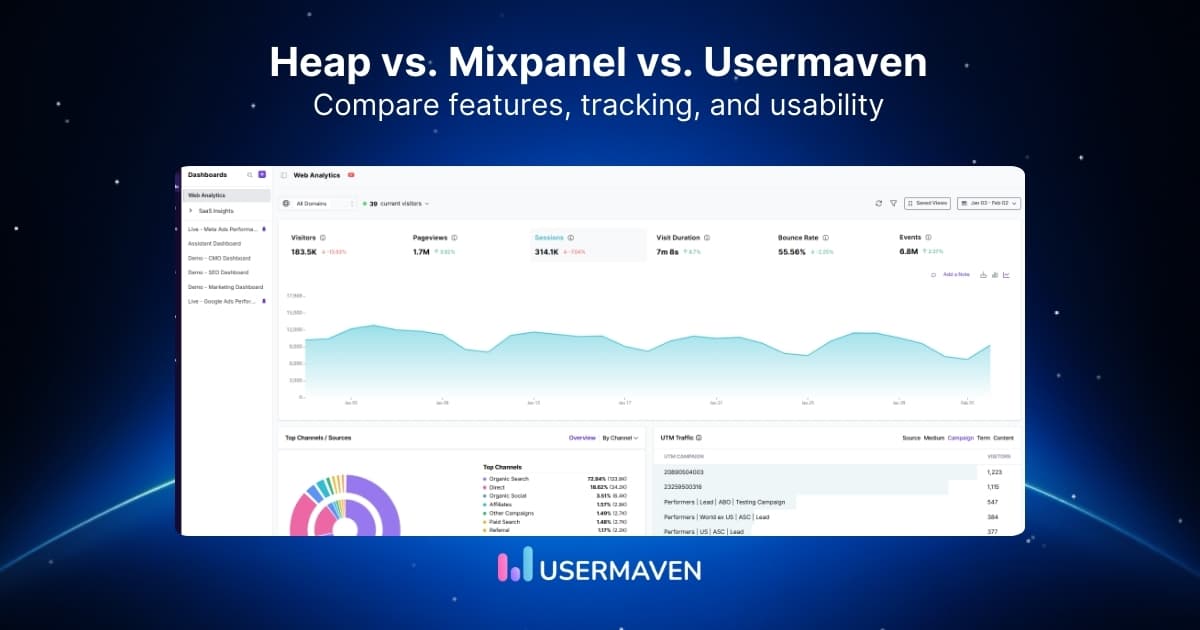
Heap vs. Mixpanel vs. Usermaven: A practical comparison
Heap, Mixpanel, and Usermaven all explain what customers do, but they are optimized for different decisions. Choosing the wrong analytics platform can leave a team with excellent event charts and no reliable answer about revenue. Teams comparing marketing attribution software should ask whether they mainly need retroactive event discovery, product experiments, or a clear link […]
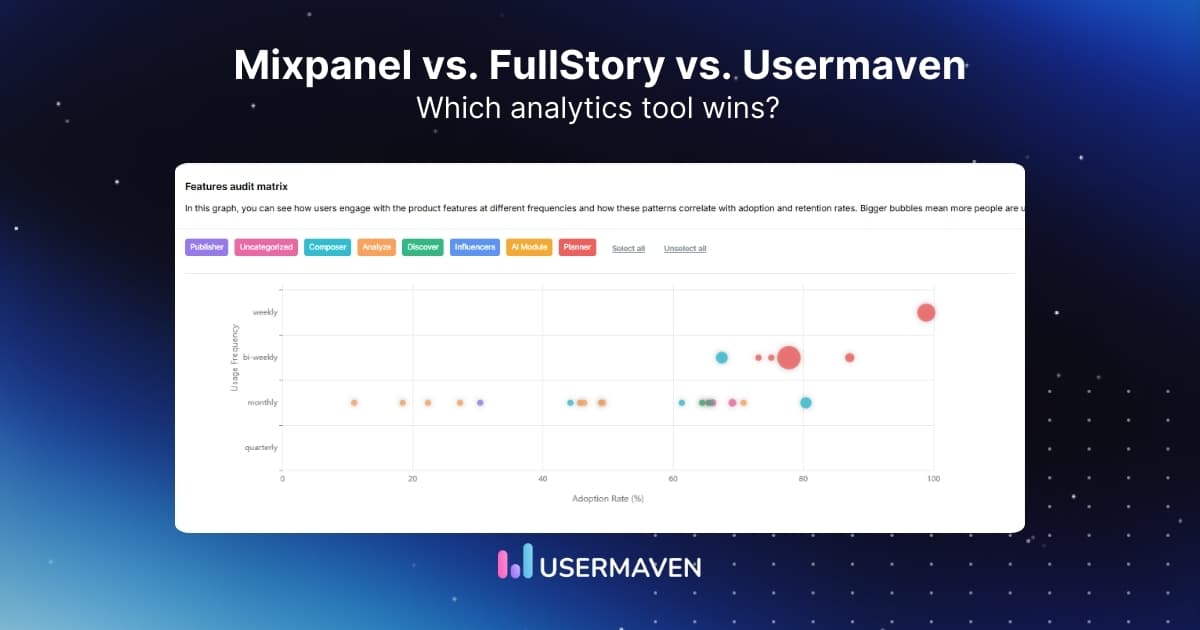
Mixpanel vs. FullStory vs. Usermaven [2026 comparison]
Mixpanel, FullStory, and Usermaven explain customer behavior differently: what users do, where experiences break, and which channels generate revenue. Teams evaluating marketing attribution software need to separate these jobs. Mixpanel is strongest in event-based product analysis and experimentation. FullStory combines session replay with digital experience intelligence. Usermaven links website and product behavior to marketing attribution […]
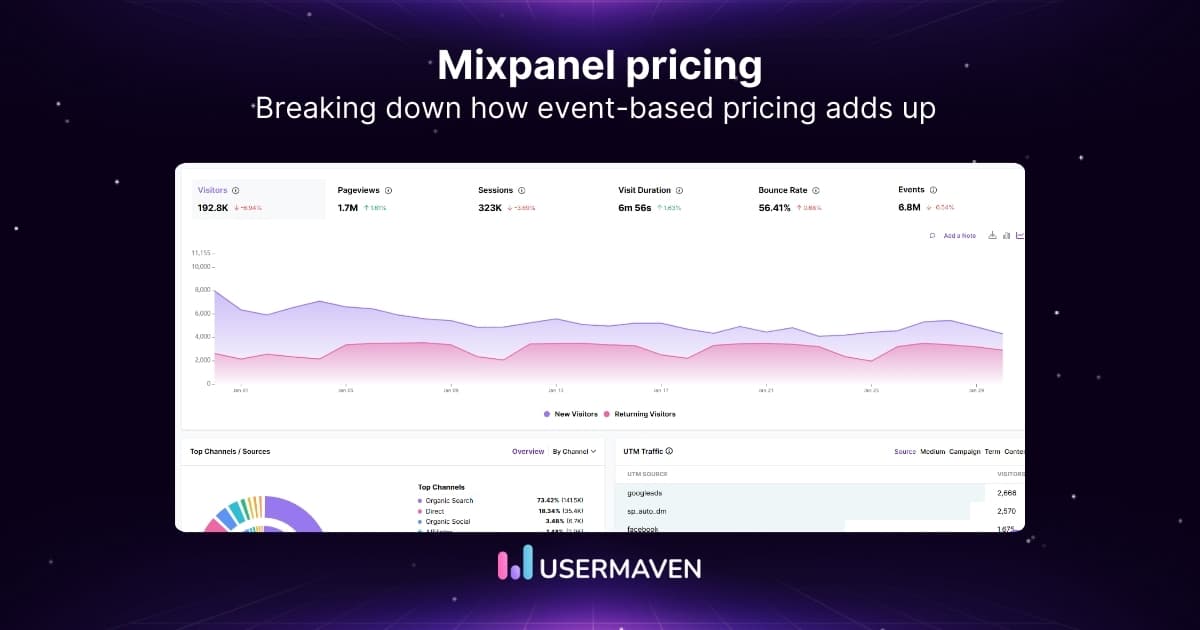
Mixpanel pricing explained (+ discover a better alternative)
Mixpanel is a popular choice for product analytics, and it’s easy to see why teams consider it early. Mixpanel has a free tier, a Growth plan with usage-based billing, and a custom Enterprise option. The cost depends on how many events your product generates and the features your team needs. For the real cost, look […]
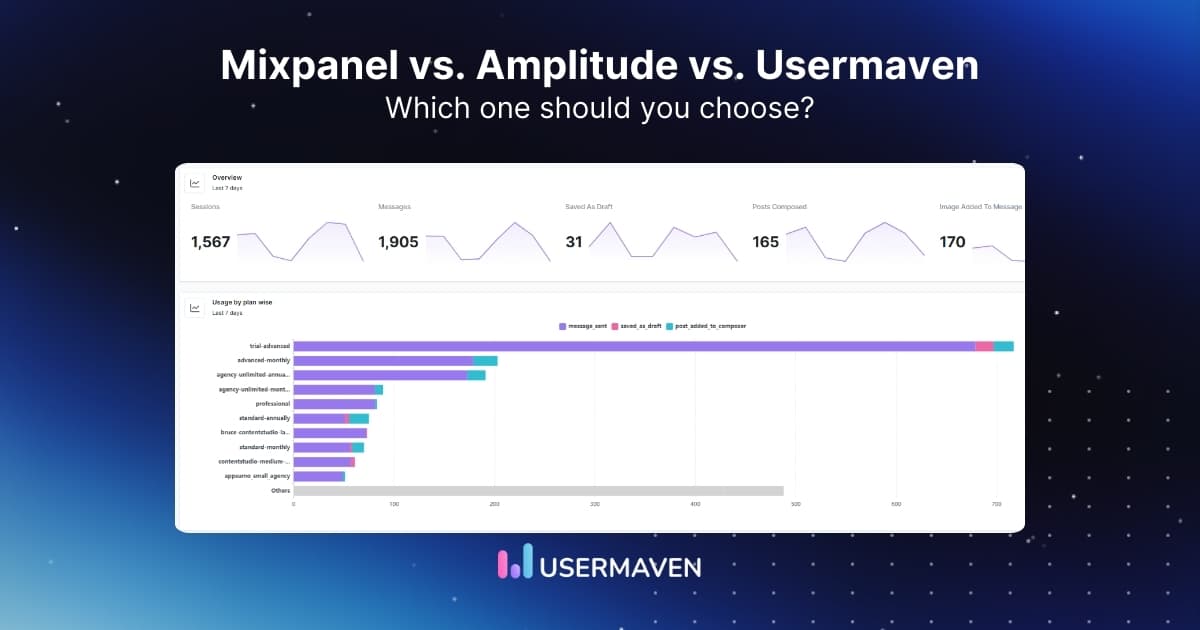
Which analytics platform wins? Mixpanel vs. Amplitude vs. Usermaven
Choosing analytics used to feel simple. Pick a tool, add tracking, and expect clean answers. Marketing teams need marketing attribution software that connects campaigns to revenue. Product teams need reliable event, funnel, and retention data. Both need a setup they can sustain. That makes Mixpanel vs. Amplitude vs. Usermaven a useful comparison. Each handles user […]
Amplitude pricing: Worth it or not? [Discover Usermaven as an alternative]
Amplitude offers product analytics, experimentation, session replay, and AI tools, but its pricing depends on how much data you track and which capabilities you need. Its Free plan includes 2 million events per month, while Plus starts at $0 and grows with usage. Growth and Enterprise use custom event-based pricing. The important question is whether […]